IBM launches Qiskit Fermions for quantum chemistry
IBM released Qiskit Fermions, an open-source toolbox that helps researchers simulate molecular and material behaviors by delaying fermion-to-qubit mapping during compilation.
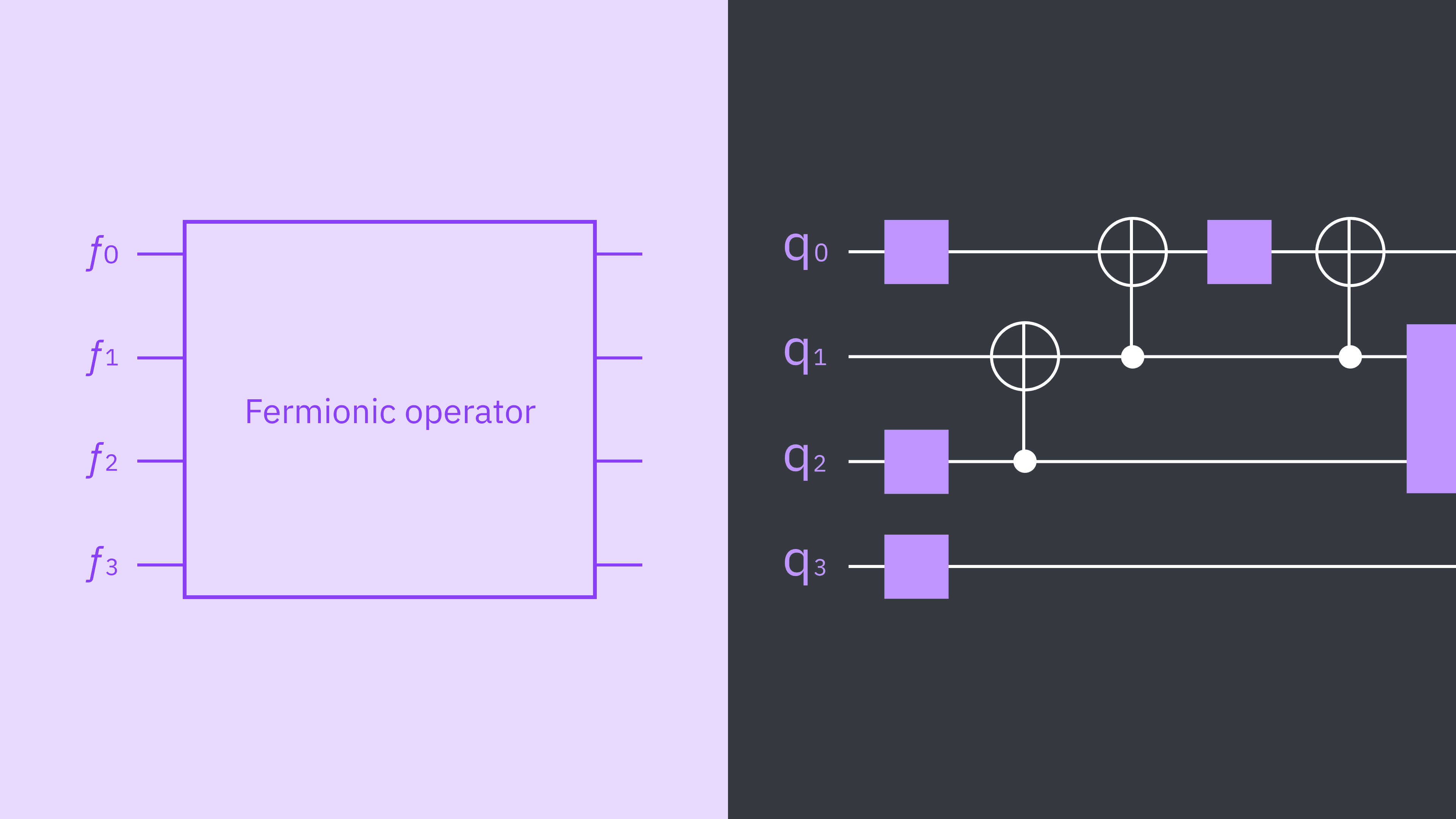
IBM has introduced Qiskit Fermions, an open-source software package designed to help researchers model molecular and material behaviors on quantum computers. The toolkit addresses a long-standing challenge in quantum chemistry and materials science: translating fermionic problems, such as Hamiltonians and time dynamics, into the qubit-based instructions that quantum hardware actually executes. By leveraging the multi-representation compiler framework introduced in Qiskit version 2.5, the software delays the conversion of fermions to qubits until the transpilation phase, preserving the physical symmetries of the problem for deeper optimization.
This structural preservation yields significant performance gains. In a simulated 1D Fermi-Hubbard model, a traditional Jordan-Wigner mapping causes the two-qubit circuit depth to scale with system size, ballooning to a depth of 407 at 100 sites. In contrast, Qiskit Fermions utilizes a flow-set encoding technique that requires just one additional ancilla qubit to group terms before synthesis. This approach maintains a constant two-qubit circuit depth of 12 across the entire range from 4 to 100 sites, preventing the circuit from growing unmanageably.
The package is built on a high-performance Rust core and features Python and C APIs, though its circuit and synthesis capabilities are currently Python-only. It integrates with existing tools in the quantum ecosystem, such as the ffsim simulator, which models circuits within the compact fermionic Fock space rather than the larger qubit Hilbert space. It also connects with the sample-based quantum diagonalization (SQD) addon for noise-robust eigenvalue estimation, and the SqDRIFT randomization workflow.
For quantum practitioners, this modular architecture provides a pluggable framework where they can either use pre-built workflows or design custom encodings and mappings. This flexibility allows researchers to run complex simulations, such as constant-depth 1D and 2D Fermi-Hubbard dynamics, without manually constructing circuits. The stable data structures also make the package highly compatible with AI coding agents, which IBM used to prototype the 1D Fermi-Hubbard guide from a single research paper in one session.
This is our own summary of reporting by IBM Research AI



%22%3E%0A%3Cstop%20offset%3D%220%25%22%20stop-color%3D%22%231a1c1c%22%2F%3E%3Cstop%20offset%3D%22100%25%22%20stop-color%3D%22%234c4546%22%2F%3E%0A%3C%2FlinearGradient%3E%3C%2Fdefs%3E%0A%3Crect%20width%3D%22800%22%20height%3D%22500%22%20fill%3D%22url(%23g)%22%2F%3E%0A%3Cg%20stroke%3D%22%23ffffff%22%20stroke-opacity%3D%220.10%22%20stroke-width%3D%222%22%3E%0A%3Cline%20x1%3D%22-200%22%20y1%3D%22500%22%20x2%3D%22100%22%20y2%3D%220%22%2F%3E%3Cline%20x1%3D%22-60%22%20y1%3D%22500%22%20x2%3D%22240%22%20y2%3D%220%22%2F%3E%3Cline%20x1%3D%2280%22%20y1%3D%22500%22%20x2%3D%22380%22%20y2%3D%220%22%2F%3E%3Cline%20x1%3D%22220%22%20y1%3D%22500%22%20x2%3D%22520%22%20y2%3D%220%22%2F%3E%3Cline%20x1%3D%22360%22%20y1%3D%22500%22%20x2%3D%22660%22%20y2%3D%220%22%2F%3E%3Cline%20x1%3D%22500%22%20y1%3D%22500%22%20x2%3D%22800%22%20y2%3D%220%22%2F%3E%3Cline%20x1%3D%22640%22%20y1%3D%22500%22%20x2%3D%22940%22%20y2%3D%220%22%2F%3E%3Cline%20x1%3D%22780%22%20y1%3D%22500%22%20x2%3D%221080%22%20y2%3D%220%22%2F%3E%0A%3C%2Fg%3E%0A%3Ctext%20x%3D%2248%22%20y%3D%22430%22%20font-family%3D%22Helvetica%2CArial%2Csans-serif%22%20font-size%3D%22132%22%20font-weight%3D%22800%22%0A%20fill%3D%22%23ffffff%22%20fill-opacity%3D%220.22%22%20letter-spacing%3D%22-4%22%3ETD%3C%2Ftext%3E%0A%3C%2Fsvg%3E)